



GABA Receptor
Gamma-aminobutyric acid Receptor; γ-Aminobutyric acid Receptor
GABA receptors are a class of receptors that respond to the neurotransmitter gamma-aminobutyric acid (GABA), the chief inhibitory neurotransmitter in the vertebrate central nervous system. There are two classes of GABA receptors: GABAA and GABAB. GABAA receptors are ligand-gated ion channels (also known as ionotropic receptors), whereas GABAB receptors are G protein-coupled receptors (also known asmetabotropic receptors). It has long been recognized that the fast response of neurons to GABA that is blocked by bicuculline and picrotoxin is due to direct activation of an anion channel. This channel was subsequently termed the GABAA receptor. Fast-responding GABA receptors are members of family of Cys-loop ligand-gated ion channels. A slow response to GABA is mediated by GABAB receptors, originally defined on the basis of pharmacological properties.
All Product Categories
-
GABA Receptor Inhibitors
(151)
View all products
-
GABA Receptor Agonists
(188)
View all products
-
GABA Receptor Antagonists
(137)
View all products
-
GABA Receptor Activators
(72)
View all products
-
GABA Receptor Modulators
(92)
View all products
-
GABA Receptor Controls
(4)
View all products
-
GABA Receptor Ligands
(16)
View all products
-
GABA Receptor Related Products (778)
Related Products (778)

-
Antibodies (14)
-
Related Compound Screening Libraries (1)
-
Etiocholanolone-d5
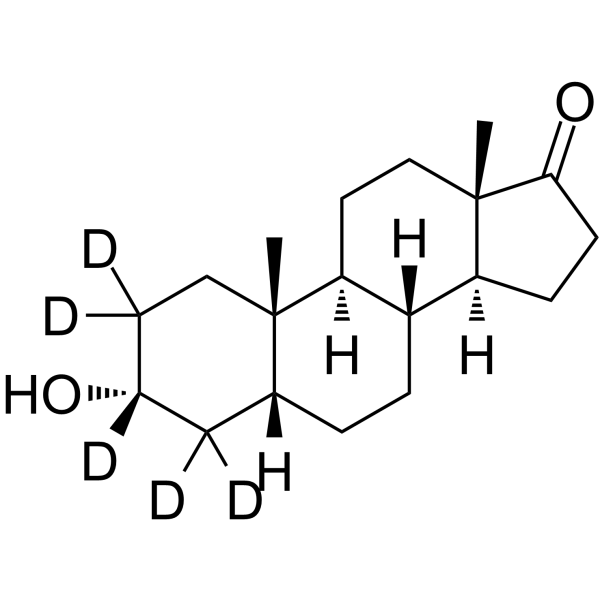 0 ImagesSynonyms: 5β-Androsterone-d5Etiocholanolone-d5 is the deuterium labeled Etiocholanolone. Etiocholanolone (5β-Androsterone) is the excreted metabolite of testosterone and has anticonvulsant activity. Etiocholanolone is a less potent?neurosteroid positive allosteric modulator?(PAM) of the GABAA?receptor than its?enantiomer form.
-
Pipequaline
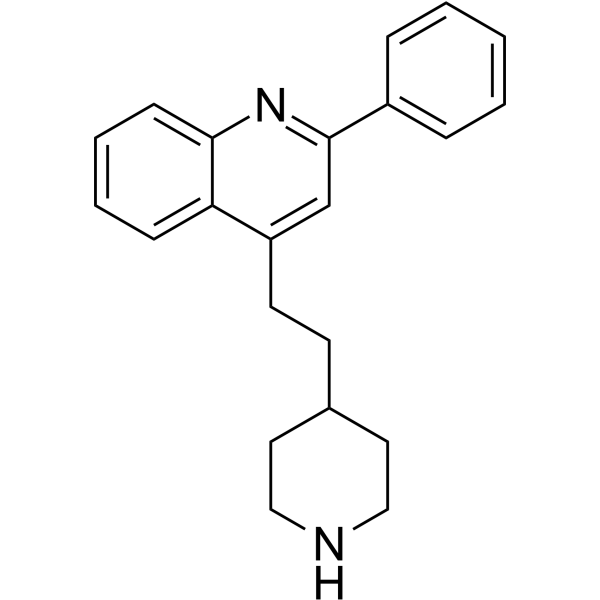 0 ImagesSynonyms: PK-8165Pipequaline (PK 8165) is a partial benzodiazepine receptor agonist with anxiolytic activity.
-
Delta3,5-cholestadien-7-one
 0 ImagesDelta3,5-cholestadien-7-one is an oxysterol and a negative allosteric modulator of GABAA receptors. Delta3,5-cholestadien-7-one reduces GABA-induced currents in HEK cells expressing α1β1γ2 or α4β3γ2 subunit-containing GABAA receptors with IC50 values of 1.5 and 1 µM, respectively. Delta3,5-cholestadien-7-one reduces GABA-induced depolarization of peptidergic and non-peptidergic nociceptors, C-LTMRs, and cold thermosensors in isolated mouse dorsal root ganglion (DRG) neurons.

-
CP-409092
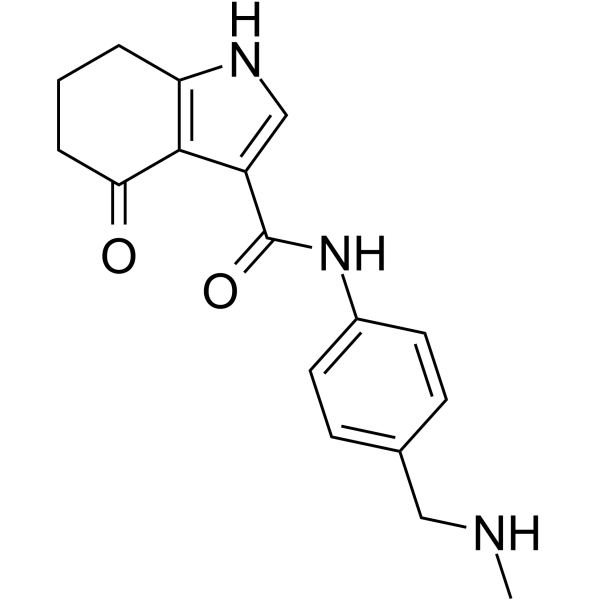 0 ImagesCat. No.: HY-101639CAS No.: 194098-25-4CP-409092 is a partial agonist of GABAA receptor, with anti-anxiety activity.
-
Furosemide sodium (Standard)
 0 ImagesFurosemide (sodium) (Standard) is the analytical standard of Furosemide (sodium). This product is intended for research and analytical applications. Furosemide sodium is a potent and orally active inhibitor of Na+/K+/2Cl- (NKCC) cotransporter, NKCC1 and NKCC2. Furosemide sodium is also a GABAA receptors antagonist and displays 100-fold selectivity for α6-containing receptors than α1-containing receptors. Furosemide sodium acts as a loop diuretic and used for the study of congestive heart failure, hypertension and edema.
-
Topiramate-13C6
 0 ImagesCat. No.: HY-B0122SSynonyms: McN 4853-13C6; RWJ 17021-13C6Topiramate-13C6 (McN 4853-13C6) is the 13C labeled isotope of Topiramate (HY-B0122). Topiramate (McN 4853) is a broad-spectrum antiepileptic agent. Topiramate is a GluR5 receptor antagonist. Topiramate produces its antiepileptic effects through enhancement of GABAergic activity, inhibition of kainate/AMPA receptors, inhibition of voltage-sensitive sodium and calcium channels, increases in potassium conductance, and inhibition of carbonic anhydrase.
-
6-(4-Methoxyphenyl)pyridazin-3-amine
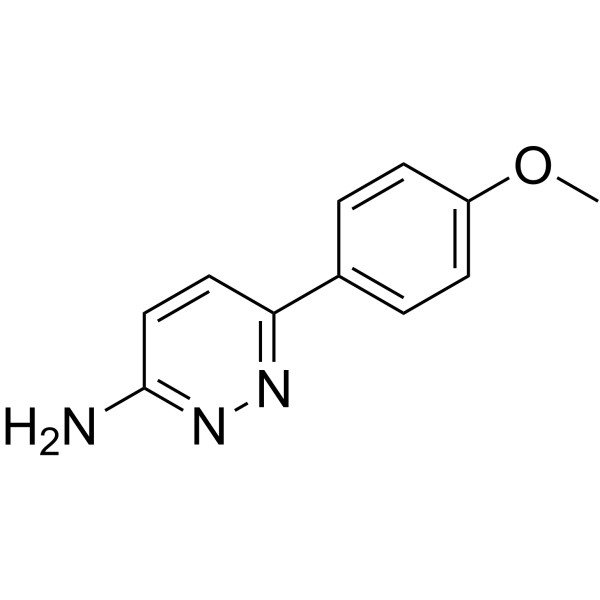 0 ImagesCat. No.: HY-W025443CAS No.: 4776-87-86-(4-Methoxyphenyl)pyridazin-3-amine is an aminopyridazine derivative, and can be used for the synthesis of SR 95103. SR 95103 is a selective and competitive GABA-A receptor antagonist.
-
(S)-Laudanosine
 0 Images(S)-Laudanosine is an alkaloid that can be found in poppies and is the S-enantiomer of Laudanosine. Laudanosine acts on the central nervous system and cardiovascular system, inhibiting low-affinity GABA receptors with an IC50 value of 10 μM, and can cause seizures, hypotension, and bradycardia. Additionally, Laudanosine exerts analgesic effects by competitively binding to the opioid Mu-1 receptor (Ki = 2.7 μM).
-
Pregabalinum naproxencarbilum
 0 ImagesCat. No.: HY-159504CAS No.: 1221072-91-8Synonyms: Pregabalin naproxencarbilPregabalinum naproxencarbilum (Pregabalin naproxencarbil) is a gabamimetic (GABA) with analgesic effects. Pregabalinum naproxencarbilum is a nonopioid analgesic targeting both inflammatory and neuropathic pain signaling pathways.
-
E2730
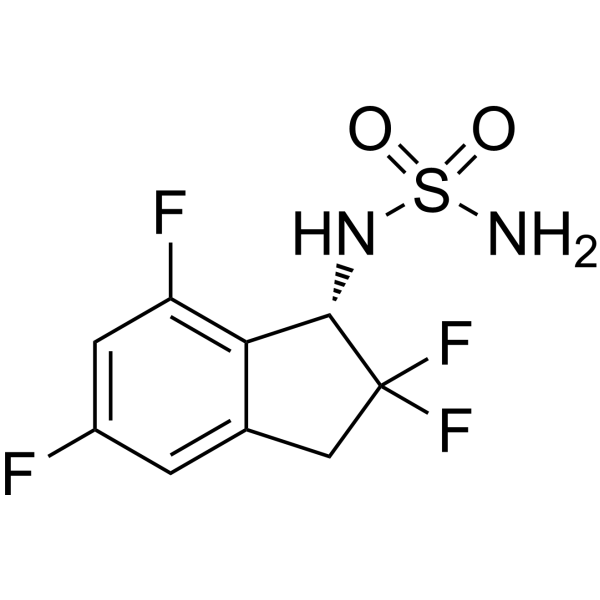 0 ImagesCat. No.: HY-155238CAS No.: 1520073-91-9E2730 is a noncompetitive but selective inhibitor of gamma-aminobutyric acid (GABA) transporter 1 (GAT1) with orally available and antiepileptic activity. E2730-mediated GAT1 inhibition is positively correlated with environmental GABA levels and selectively inhibits GAT1-mediated GABA uptake. E2730 (5-50 mg/kg; po) in rat amygdala ignition model, and in mouse cornea ignition (5-50 mg/kg), drug resistance 6Hz-44mA has demonstrated in vivo efficacy in models of psychomotor epilepsy (5-50 mg/kg), fragile X syndrome (2.5-300 mg/kg), and Dravet syndrome (10 mg/kg, 20 mg/kg).
-
Bentazepam
 0 ImagesCat. No.: HY-107323CAS No.: 29462-18-8Synonyms: QM 6008; Thiadipone; TiadiponeBentazepam (Thiadipone) is a compound with short-action anxiolytic effect. Bentazepam shows anticonvulsant and sedative properties. Bentazepam can be used for the research of depressive disorder and anxiety.
-
OV329
 0 ImagesCat. No.: HY-179215ACAS No.: 2093928-28-8OV329 is a potent GABA aminotransferase inactivator. OV329 is a Vigabatrin (HY-15399) analogue. OV329 can increase brain GABA levels and block abnormal intracerebral hyperexcitability. OV329 exhibits anticonvulsant and antiepileptic activities. OV329 can be used for the research of neurological disease, such as seizure.
-
Arbaclofen placarbil
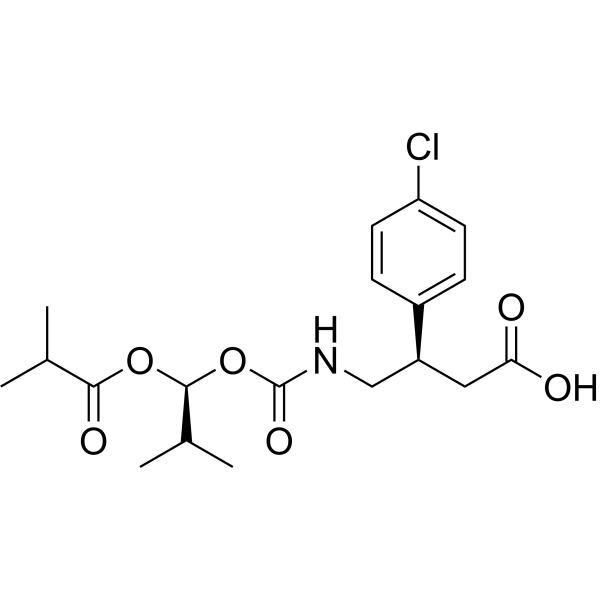 0 ImagesCat. No.: HY-14735CAS No.: 847353-30-4Synonyms: XP 19986Arbaclofen placarbil is a novel transported proagent of the active R-isomer of baclofen. Baclofen is a racemic GABAB receptor agonist
-
Creatinine-15N
 0 ImagesCat. No.: HY-B0504S5Synonyms: NSC13123-15NCreatinine-15N (NSC13123-15N) is the 15N-labeled Creatinine (HY-B0504). Creatinine (NSC13123) is an orally active, blood-brain barrier-permeable modulator of GABAA and NMDA receptors, with activities of antioxidation and metabolic regulation. Creatinine is generated via non-enzymatic conversion of creatine and phosphocreatine in muscle. Creatinine serum levels correlate with muscle mass, glomerular filtration rate, and extrarenal clearance, serving as an evaluation biomarker for renal function, muscle mass, and clinical outcomes, and used for perioperative renal risk assessment. In addition, Creatinine can induce specific Cryptococcus species to produce creatinine deiminase and act as their nitrogen source, while it can be secreted via renal tubules. Creatinine is widely used in research related to various diseases such as neurodegenerative diseases, psychiatric disorders, acute kidney injury, chronic kidney disease, and renal failure.
-
ASP8062
 0 ImagesCat. No.: HY-184060CAS No.: 1704716-36-8ASP8062 is an orally active, blood-brain barrier-permeable selective GABAB receptor positive allosteric modulator. ASP8062 enhances GABA-mediated activation of GABAB receptors and strengthens GABAergic neurotransmission. ASP8062 reverses Reserpine (HY-N0480)-induced myalgia, regulates the sleep-wake cycle, increases delta wave power during non-REM sleep, and impairs motor coordination at high doses. ASP8062 penetrates the central nervous system with a half-life of 40-50 h. ASP8062 can be used in research related to opioid use disorder, fibromyalgia, chronic pain, and alcohol use disorder.
-
Acamprosate-d3 calcium
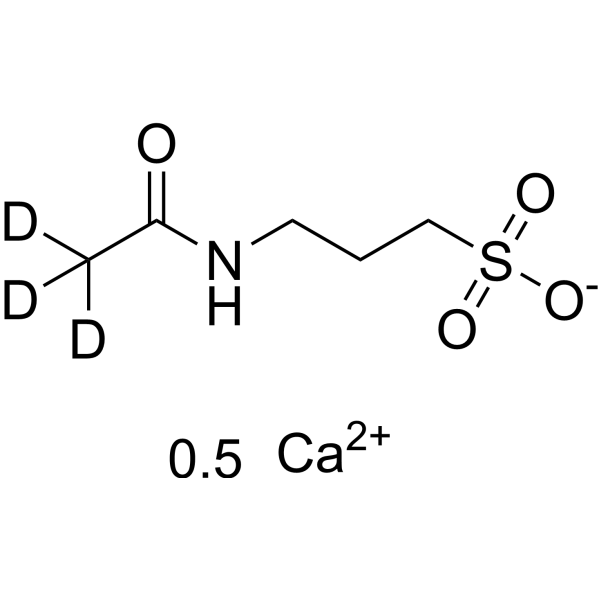 0 ImagesAcamprosate-d3 (calcium) is the deuterium labeled Acamprosate calcium. Acamprosate calcium is a GABA receptor agonist and modulator of glutamatergic systems.
-
Cefepime hydrochloride
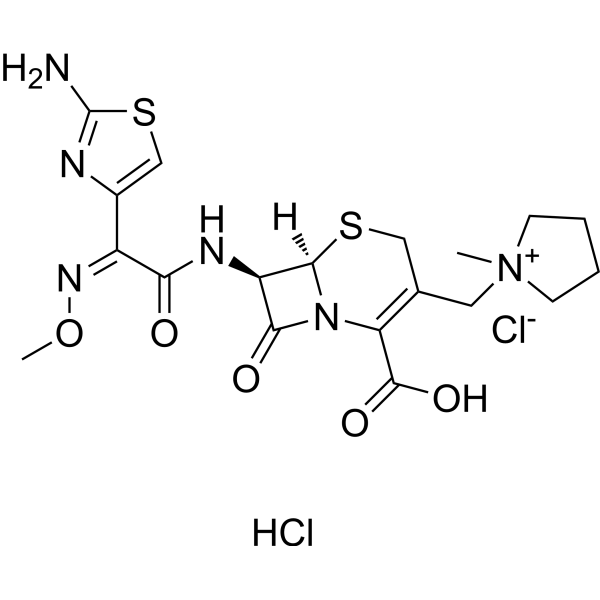 0 ImagesCat. No.: HY-108877CAS No.: 107648-80-6Synonyms: BMY-28142 hydrochlorideCefepime (BMY-28142) hydrochloride is a broad-spectrum, blood-brain barrier-permeable cephalosporin antibiotic with hPON1 inhibitory activity, with an IC50 of 21.115 mM and a Ki of 35.092 mM. Cefepime hydrochloride inhibits hPON1 via a non-competitive mechanism and blocks GABAA receptors. Cefepime hydrochloride penetrates the outer membrane of Gram-negative bacteria, inhibits the growth of Gram-positive and Gram-negative bacteria, and does not induce the production of β-lactamase.
-
Cefepime chloride
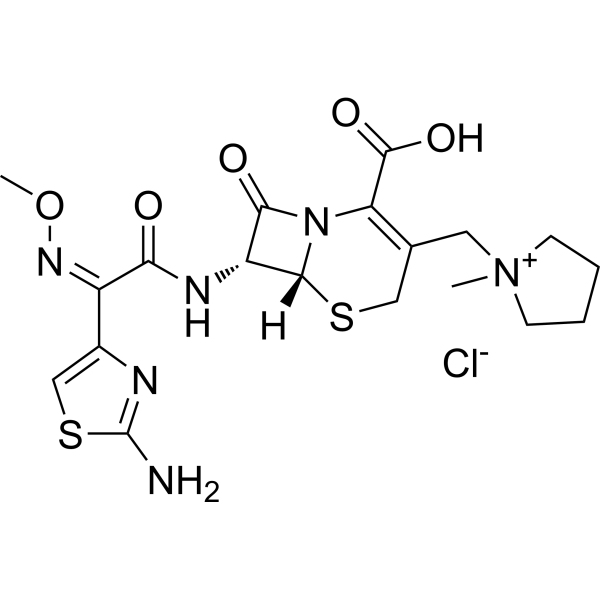 0 ImagesCat. No.: HY-B0692ACAS No.: 107648-79-3Synonyms: BMY-28142 chlorideCefepime (BMY-28142) chloride is a broad-spectrum, blood-brain barrier-permeable cephalosporin antibiotic with hPON1 inhibitory activity, with an IC50 of 21.115 mM and a Ki of 35.092 mM. Cefepime chloride inhibits hPON1 via a non-competitive mechanism and blocks GABAA receptors. Cefepime chloride penetrates the outer membrane of Gram-negative bacteria, inhibits the growth of Gram-positive and Gram-negative bacteria, and does not induce the production of β-lactamase.
-
Primidone-d5
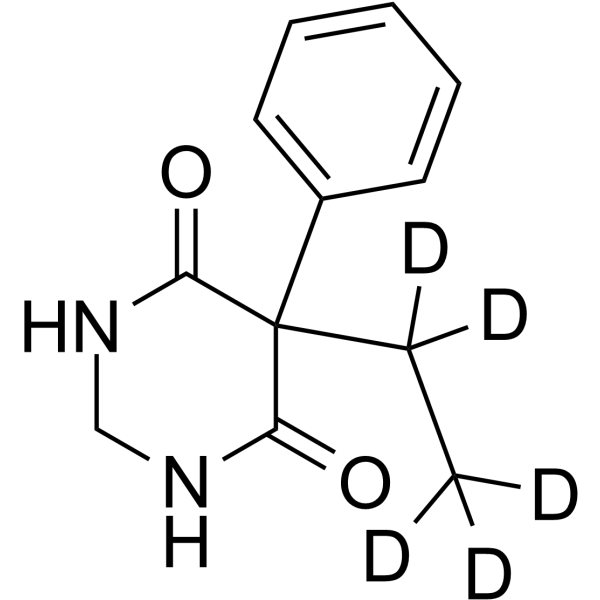 0 ImagesPrimidone-d5 is the deuterium labeled Primidone. Primidone is the orally active inhibitor for TRPM3 (IC50 = 0.6 μM), RIP kinase and voltage-gated sodium channel, and the antagonist for GABA receptor. Primidone can be used as the analgesic and anticonvulsant agent.




